

Mainstream Next‑Generation PV Technologies
Grid Parity is Our Goal
We believe that through durable R & D investment and technology breakthroughs, Gold Stone will become one of the leaders of the photovoltaic industry. Our confidence is rooted in our restless technology innovations.


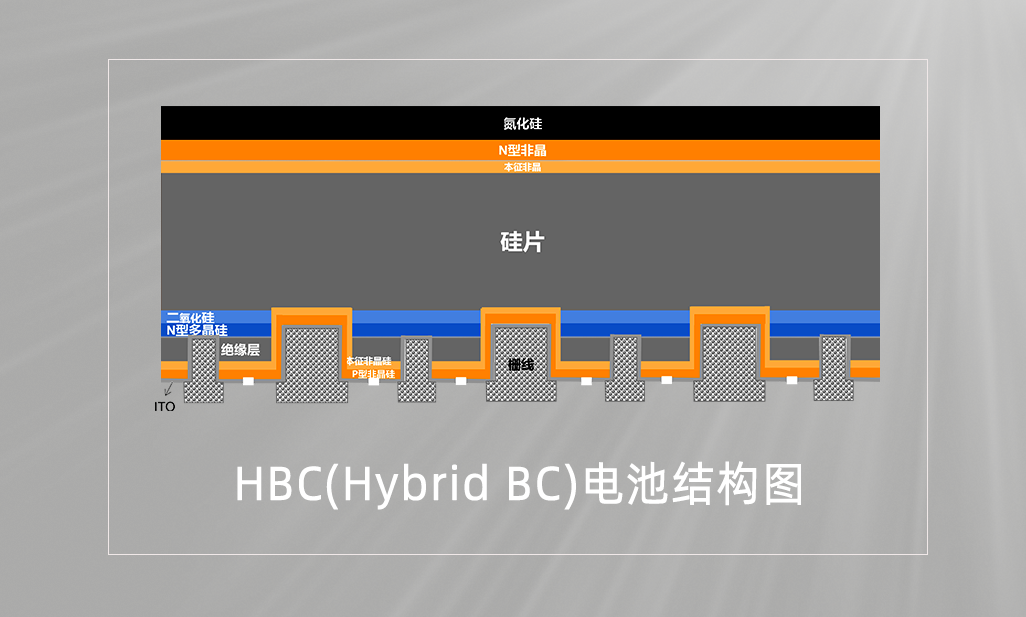
GoldStoneSolar’s HBC Cell Technology
Hybrid Back‑Contact (HBC) technology represents a new‑generation BC cell solution, pioneered by the National Engineering Research Center for High‑Efficiency Solar Cell Equipment and Technology at Gold Stone Energy. As an upgraded iteration of heterojunction back‑contact technology, it for the first time successfully combines conventional heterojunction passivation structures with tunneling/polycrystalline structures.
Delivering higher conversion efficiency, lower production cost, appealing appearance and stable performance, HBC is widely regarded as a mainstream technology for the future PV industry.
At present, the technology is gradually moving toward mass production.

Industry‑First HBC Cell Technology
On March 24, 2023, at the 2023 Symposium on High‑Efficiency Solar Cell Equipment and Technology, Goldstone Energy, together with the National Engineering Research Center for High‑Efficiency Solar Cell Equipment and Technology, released the report Mass‑Producible Second‑Generation Heterojunction Cell Technology. It unveiled the industry‑first Hybrid BC Cell Technology (previously named Dual‑Heterojunction HDT2.0 Technology), achieving a cell conversion efficiency of 27.08% measured with a mask aperture of 195.7 cm².
For the first time, this technology successfully integrates the conventional heterojunction passivation structure with the tunneling/polycrystalline structure. As a cutting‑edge photovoltaic technology fully independently developed by Chinese enterprises with proprietary intellectual property rights, it represents a major technical achievement released by the National Engineering Research Center.
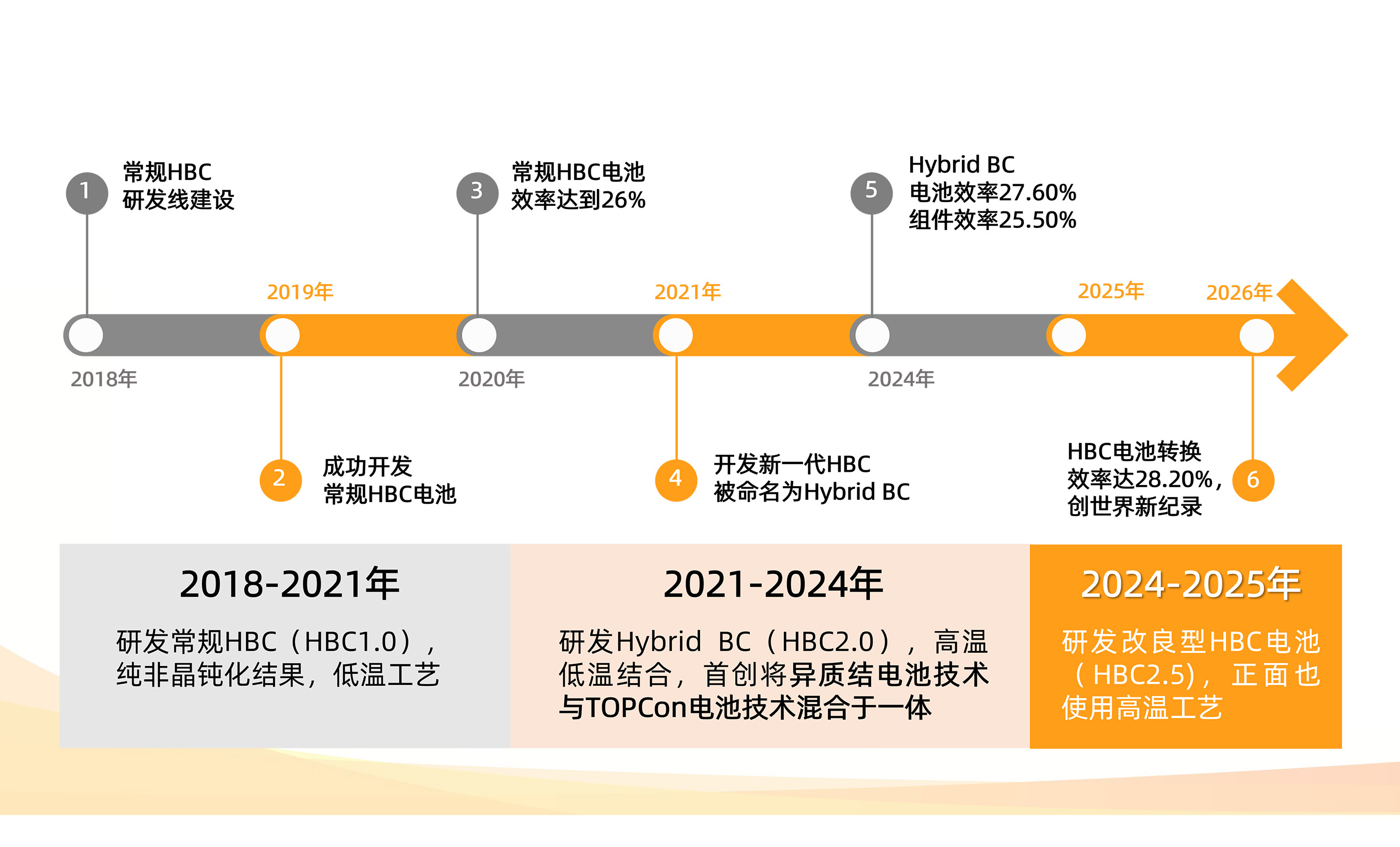
Ongoing R&D of HBC Cell Technology
2018‑2021
R&D of conventional HBC (HBC1.0): pure amorphous silicon passivation structure, low‑temperature process
2021‑2024
R&D of Hybrid BC (HBC2.0): combined high‑temperature and low‑temperature processes; world’s first integration of heterojunction and TOPCon cell technologies
2024‑2025
R&D of optimized Hybrid BC cell (HBC2.5): high‑temperature process also adopted on the front‑side

Significant Advantages of HBC Cells and Modules
- High Efficiency: Free of metal grid lines on the front‑side, delivering high efficiency and prominent power‑generation performance.
- Low Cost: Single‑sided ITO application cuts ITO material cost by 70%; silver‑copper paste is adopted to achieve substantial cost reduction.
- Attractive Appearance: No metal grid lines on the front‑side for an aesthetic look.
- High Bifaciality: Module bifaciality exceeds 75%.
- Low Temperature Coefficient: The power temperature coefficient of hybrid HBC cells reaches ‑0.23%/℃, lower than that of TOPCon and HJT cells, enabling higher power‑generation capacity per watt.
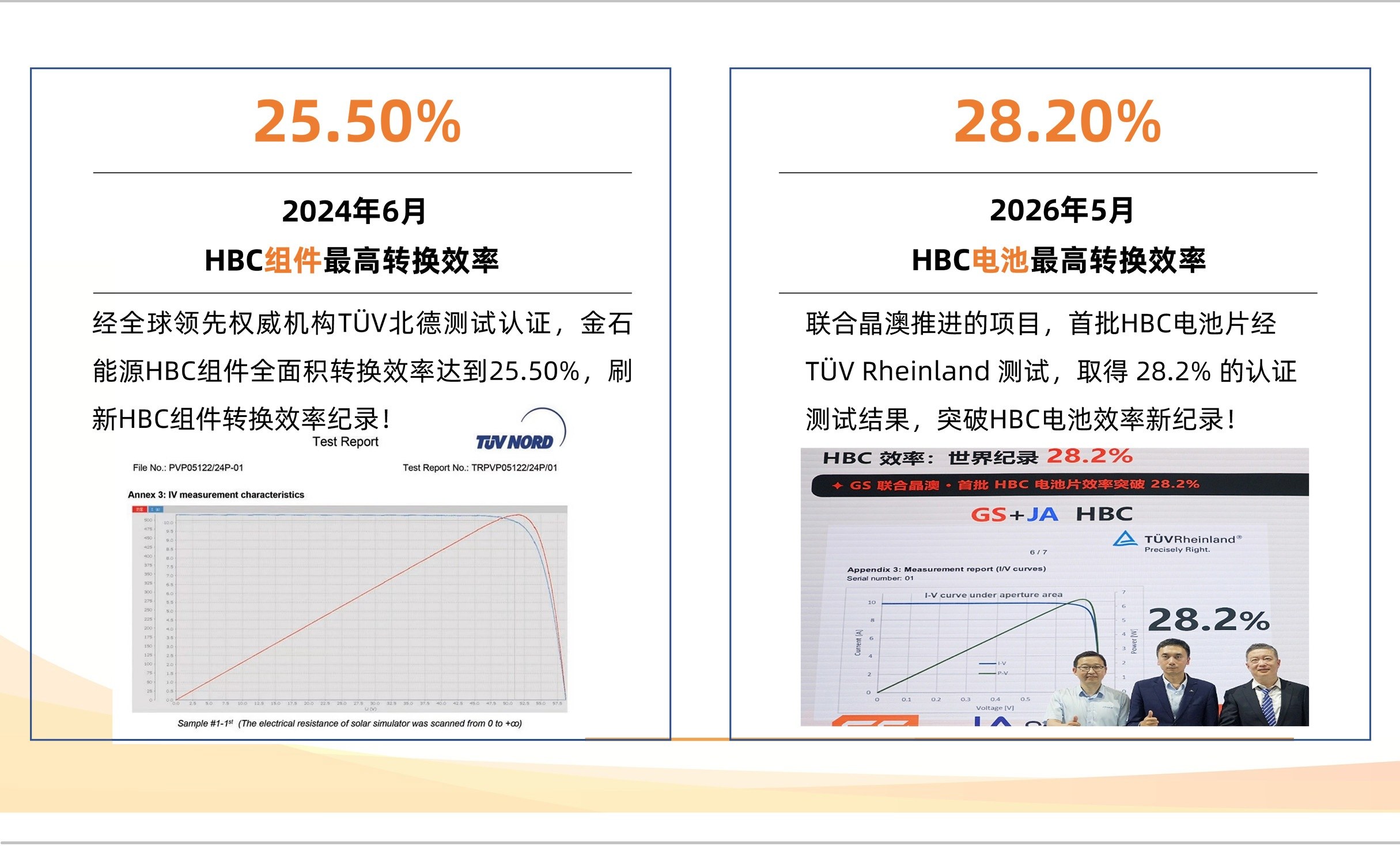
28.2% Conversion Efficiency with Ample Upgrade Potential
HBC cells deliver higher conversion efficiency and retain substantial room for efficiency enhancement.
In November 2024, tested and certified by Fujian Institute of Metrology (National Photovoltaic Industry Metrology and Test Center), the conversion efficiency of the company’s HBC cell hit 27.6%.
In March 2026, relevant HBC technical achievements completed jointly by the company and Beijing University of Technology were published in Nature, the world‑renowned top academic journal.
In May 2026, for the project advanced in cooperation with JA Solar, the first batch of HBC cells obtained a certified test result of 28.2% from TÜV Rheinland, setting a new efficiency record for HBC cells!
Benefiting from its inherent technical strengths, when combined with perovskite technology, HBC cells are expected to achieve a conversion efficiency exceeding 40% in the future.

Multiple Cost‑Reduction Advantages of HBC Cells
- The HBC cell adopts high‑temperature processes for the front‑half production and low‑temperature processes for the rear‑half production, perfectly integrating TOPCon and HJT processes.
- Compared with conventional HBC cells, the HBC cell uses a tube furnace to deposit the first semiconductor layer, cutting down the quantity of high‑cost plate‑type PECVD equipment.
- Laser patterning is applied for HBC cells, bringing a more streamlined manufacturing flow, lower equipment cost and higher production yield of cells.
- HBC cells support the company’s proprietary‑formula low‑temperature silver‑copper paste, with roughly 30%‑40% lower cost compared with silver paste grid lines.
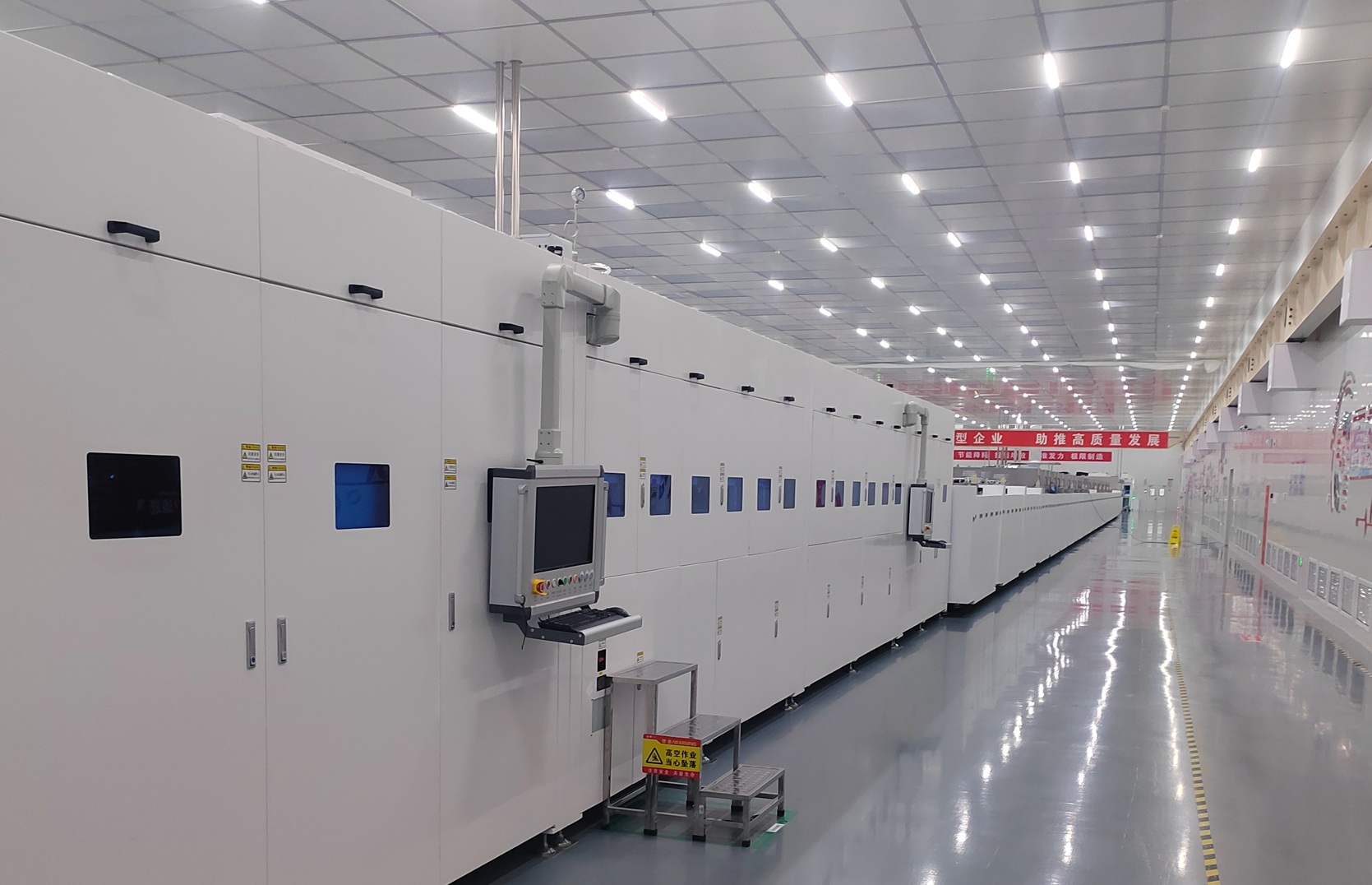
Turnkey Production Equipment Lays the Foundation for HBC Cell Industrialization
In terms of structure and processes, hybrid HBC solar cells integrate the process technologies of both TOPCon and HJT solar cells. Mass production of such cells imposes stringent requirements on turnkey equipment, supporting processes and auxiliary materials.
Building upon its mature GW‑scale turnkey production lines for high‑efficiency HJT cells with proprietary intellectual property rights, Goldstone Energy has developed PECVD and PVD equipment dedicated to hybrid HBC cells, laying a solid foundation for the mass production of HBC cells. Feasible upgrade solutions have also been gradually rolled out to convert existing PERC, TOPCon and HJT production lines into HBC‑capable lines.
To date, the company has collaborated with multiple leading enterprises in the industry on the mass‑production development of HBC cells.

HBC‑Perovskite Tandem Technology
Thanks to its structural characteristics, heterojunction cells are highly suitable to serve as the bottom cell for forming tandem devices with perovskite cells. This tandem combination is regarded as one of the most promising technical routes.
Research results show that perovskite solar cells can make more efficient use of high‑energy ultraviolet, blue and green visible light, while heterojunction cells can effectively harness infrared light that cannot be absorbed by perovskite materials. Therefore, the tandem integration of perovskite and heterojunction cells can break the theoretical efficiency limit of conventional crystalline‑silicon solar cells and further boost the conversion efficiency of solar cells.
According to the company’s simulation calculations, the maximum conversion efficiency of HBC‑perovskite tandem cells can exceed 40%.
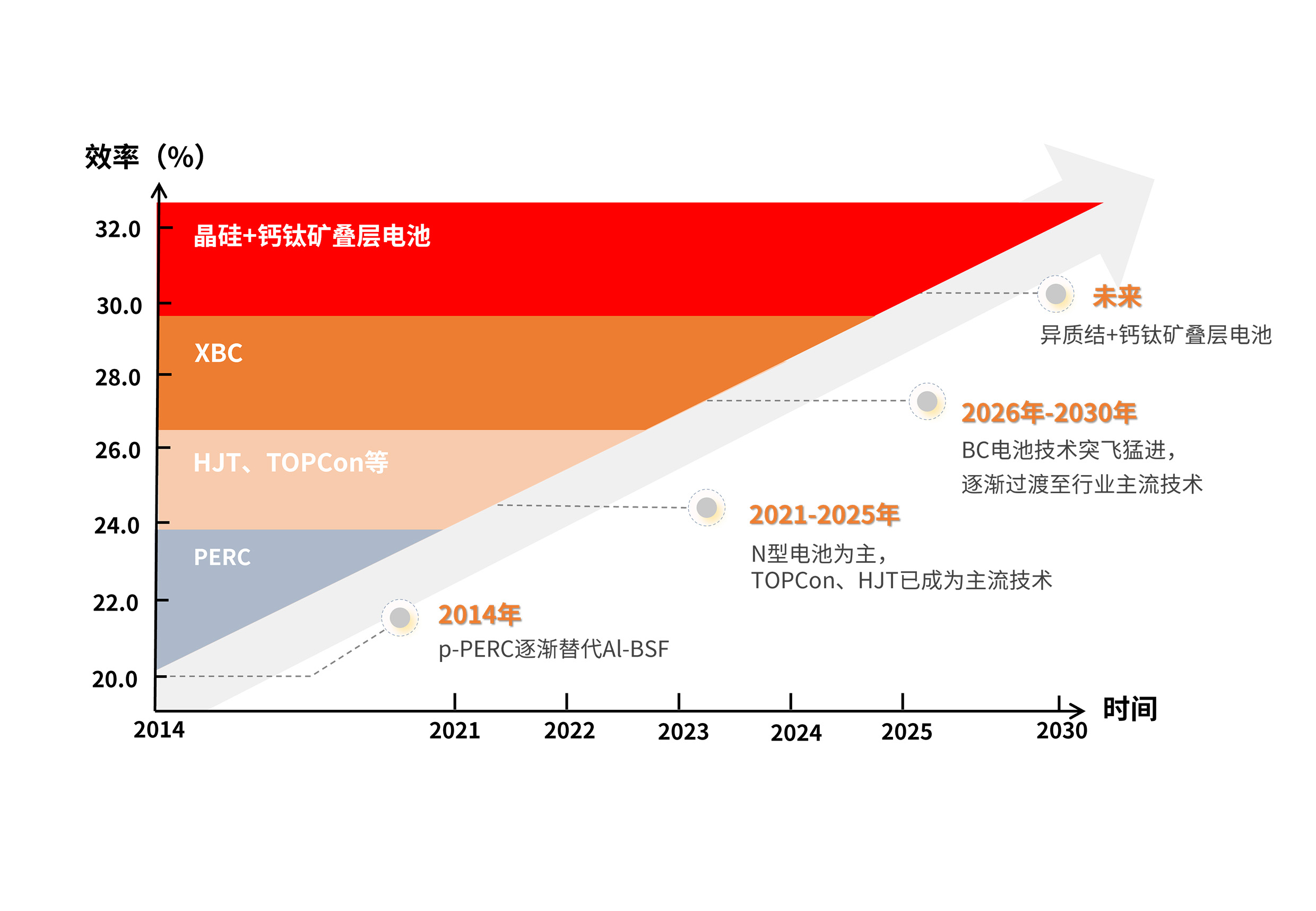
BC Cells Embark on the Path of Industrialization
According to predictions by the China Photovoltaic Industry Association (CPIA), China’s newly‑added PV installed capacity will reach 270 GW to 300 GW in 2025.
As a high‑efficiency technical route in the photovoltaic industry, BC cells are seeing accelerated industrialization in 2025.
China PV Industry Roadmap (2024‑2025) compiled by the China Photovoltaic Industry Association indicates that BC‑type solar cells accounted for approximately 5.0% of the market share in 2024. Driven by vigorous promotion from leading enterprises in the industry, its market share increased substantially compared with 2023. It is projected to gradually rise to around 20%.
According to the White Paper on Back‑Contact (BC) Cell Technology Development released in April 2025, BC cells are expected to capture a 13% market share in 2025 and 62% by 2030, securing a mainstream position in the market.

